
 USD
USD  USD
USD  GBP
GBP  EUR
EUR  INR
INR  ZAR
ZAR  AUD
AUD  CAD
CAD  MYR
MYR  SGD
SGD  THB
THB  HKD
HKD  BRL
BRL  AED
AED 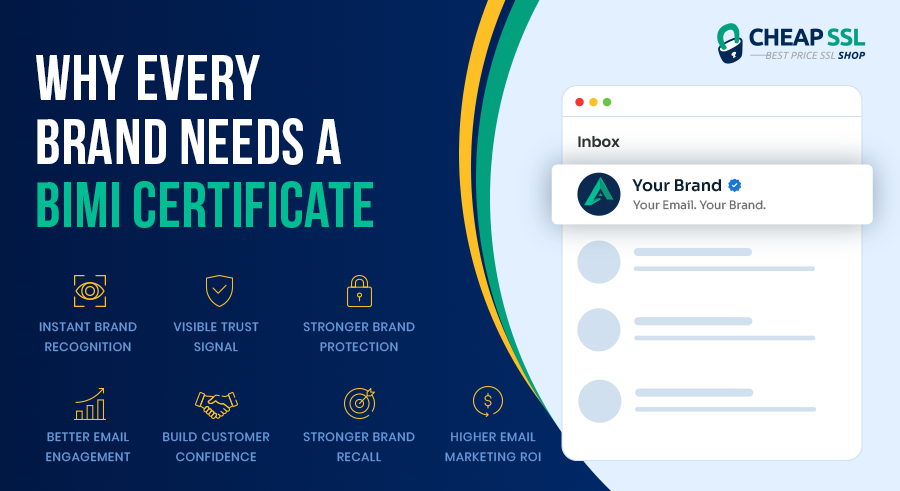
A BIMI certificate is one of the few email investments that pays off in the inbox before a single word gets read. Most brands have already done the hard work by enforcing SPF, DKIM, DMARC, but none of that effort is visible to the customer. BIMI changes that; it connects your authentication stack to a verified logo that renders directly in the sender slot across Gmail, Apple Mail, Yahoo, and Fastmail, turning backend security into something recipients can see.
What is a BIMI Certificate?
A BIMI certificate is a digital credential issued by a recognized Certificate Authority that verifies a brand’s ownership of the logo it intends to display in the inbox. Without it, most major mailbox providers will not render the logo, even if the BIMI DNS record is correctly published.
There are two certificate types currently in use:
Verified Mark Certificate (VMC) – Requires trademark registration for your logo and is issued by a recognized Certificate Authority. Displays your logo across Gmail, Yahoo Mail, and Apple Mail, and additionally triggers Gmail’s blue verified checkmark next to the sender name.
Common Mark Certificate (CMC) – Needs proof of logo use for at least one year instead of a registered trademark. Shows your logo in major providers including, Gmail, Yahoo Mail, and Apple Mail. Its a practical path for brands that haven’t yet registered a trademark or are mid-process.
The certificate alone is not sufficient. It works in combination with a DMARC-enforced domain, aligned SPF and DKIM, a correctly published BIMI DNS record at default._bimi.[yourdomain.com], and a logo in SVG Tiny P/S format hosted at a public HTTPS URL.
This post covers seven reasons why a BIMI certificate is the logical next step for any brand that has reached DMARC enforcement, and what you need to implement it.
-
Make Your Brand Instantly Recognizable in the Inbox
A typical professional inbox is a fight. Promotional sends, transactional pings, internal threads, and personal notes share the same vertical strip of screen. Sender names blur together. Subject lines start sounding identical after seeing the few campaigns.
A logo wins that fight faster than words can, sometimes under milliseconds. That’s how long the brain takes to recognize a familiar visual mark, well before anyone parses a sender name or even glances at preview text. BIMI drops your verified logo into that tiny avatar slot inside Gmail, Apple Mail, Yahoo, and Fastmail. Your sender row stops looking like every other generic initials in the stack.
Visibility starts before the open, click, or before any campaign metric you currently track. If the reader never recognizes the sender, the rest of your funnel never gets a turn.
-
Turn Email Authentication Into a Visible Trust Signal
SPF, DKIM, and DMARC do real work, but they do it in headers most users never read. The average customer cannot tell a quarantine-enforced domain from a spoofed one. Your security team’s effort stays invisible.
Here’s how the mechanics actually work. A message passes DMARC at quarantine or reject, the receiving mailbox pulls your BIMI record, and your verified logo renders right next to the sender name. The customer sees a brand mark. But the mark only shows up because the message was authenticated cleanly, which is the part most teams don’t realize is doing the heavy lifting.
That is the bridge. Technical security on one side, customer perception on the other, with a single logo carrying the proof across. It is one of the few moments in email where backend hygiene shows up as front-end brand.
-
Strengthen Brand Protection Against Email Impersonation
Brand impersonation is the dominant attack pattern in modern phishing. Attackers aren’t required to build new infrastructure. They mimic a familiar brand name, famous logo, and take advantage of the trust the brand has already established.
BIMI only works when DMARC is at quarantine or reject, which means the spoofed message is already blocked before the logo question even comes up.
Even if the attacker is able to include the same image in the body, the mailbox won’t display it, since the mailbox only displays the logo if both DMARC and BIMI pass.
With time, the customers get a sense of the pattern. No logo, no trust. That’s a minor behavior that can have a significant impact on the brand reputation and the associated customer relationships.
-
Improve Email Engagement and Campaign Performance
Recognizable branding moves recipient behavior in a measurable way. Familiarity reduces friction at the scan stage, which is where most opens are decided. The research is consistent. Even modest deployments show measurable shifts in clicks and inbox dwell time.
BIMI supports subject line testing, segmentation, or send-time work. Your campaigns still need to be useful. BIMI just makes sure they get a fair shot at being seen.
-
Build Confidence in High-Value Customer Communications
There are some emails that are important, like:
- Password resets
- Fraud alerts
- Invoices
- Order confirmations
- Renewal reminders
It is these messages where even a little doubt will cost you money or trust.
These are also the messages attackers like to imitate, because they trigger urgency. A reader who is uncertain whether a billing notice is real may delay the payment, contact support, or worse, click a lookalike from the spoofer. Each path raises your operational cost and lowers customer confidence.
A verified logo on the message reduces that hesitation. The reader sees the brand they recognize, in the slot they expect, on a message the mailbox has already authenticated. The customer experience becomes cleaner, and the action you actually want, a click on the reset link, a confirmation of the order, happens faster.
-
Reinforce Brand Recall Across Every Email Touchpoint
Brand recall is a function of repetition. Users remember marks they see often. Same form, places, and consistency over time is what does the actual work, and email happens to be one of the most frequent customer touchpoints any business has.
A mid-market brand can push thousands of messages a week through marketing, lifecycle, and transactional streams (sometimes more, depending on the program). Without BIMI, none of those impressions carries the logo.
With it, every authenticated message reinforces the same visual identity your audience already sees on your website, ads, app and social posts. That repeated exposure is slow work. It strengthens future engagement, supports purchase decisions over the long run, and pulls your email channel into the broader brand system instead of leaving it outside the design discipline you apply everywhere else.
-
Maximize the Return on Your Email Marketing Investment
Email marketing involves significant investment across list growth, content production, automation platforms, personalization tooling, and the authentication stack underneath all of it. Competition for attention sharpens every quarter. BIMI doesn’t just adds a new channel, but increases yield on the one you’re already paying for.
A campaign that opens 10 to 20% more often pulls more from the same list, the same content, the same send schedule. A transactional stream that earns more trust quietly reduces support load. A brand mark showing up across every touchpoint compound with the rest of your marketing spend, which is the kind of return that doesn’t show up as a line item anywhere.
The payoff lies in opens, clicks, and avoids fraud costs. Treat BIMI as a complement to the email program you already run, not a replacement for any part of it.
What Do You Need to Get Started With BIMI
BIMI sits on top of your existing authentication infrastructure. Here’s what needs to be in place:
-
DMARC at Enforcement
Your DMARC policy must be set to p=quarantine or p=reject. A p=none policy will not qualify, even if SPF and DKIM are passing. BIMI only activates once DMARC enforcement is confirmed by the receiving mailbox.
-
SPF and DKIM Alignment
SPF and DKIM must be present and aligned with your sending domain. Alignment means the domain in your DKIM d= tag and the Return-Path domain for SPF must match your From domain.
-
A Published BIMI DNS Record
The BIMI record is a DNS TXT record published at default._bimi.[yourdomain.com]. It points to the location of your logo file, once you have your VMC or CMC certificate.
-
A VMC or CMC Certificate
Mailbox providers require a Verified Mark Certificate (VMC) from a recognized Certificate Authority. VMCs need trademark registration for your logo. A Common Mark Certificate (CMC) is an option for brands who do not have registered trademark.
-
An SVG Tiny P/S Logo at a Public HTTPS URL
Your BIMI logo must be in SVG Tiny P/S format — a restricted SVG profile that excludes scripts, animations, and external references. It must be hosted at a publicly accessible HTTPS URL (no redirects, no authentication gates). The aspect ratio should be 1:1 for clean rendering in the circular avatar slot most mailbox providers use.
Conclusion
BIMI is a tangible result of the authentication efforts already undertaken by most security teams and is rewarded through recognition, trust, engagement, and improved brand recall in the future. If your DMARC policy is at quarantine or reject, the next logical step is to publish a BIMI record, get a BIMI Certificate from a recognized authority, host your SVG Tiny PS logo at a public URL, and start showing up with your brand mark in every inbox that supports it.
Frequently Asked Questions About BIMI Certificates
What is a BIMI certificate?
Does BIMI improve email open rates?
Which email providers support BIMI?
How long does a BIMI certificate last?
Transform Email Authentication into a Visible Brand Advantage
A BIMI certificate helps turn your email authentication efforts into a visible trust signal. Display your verified brand logo in supported inboxes and make every email more recognizable.
Related Posts: